
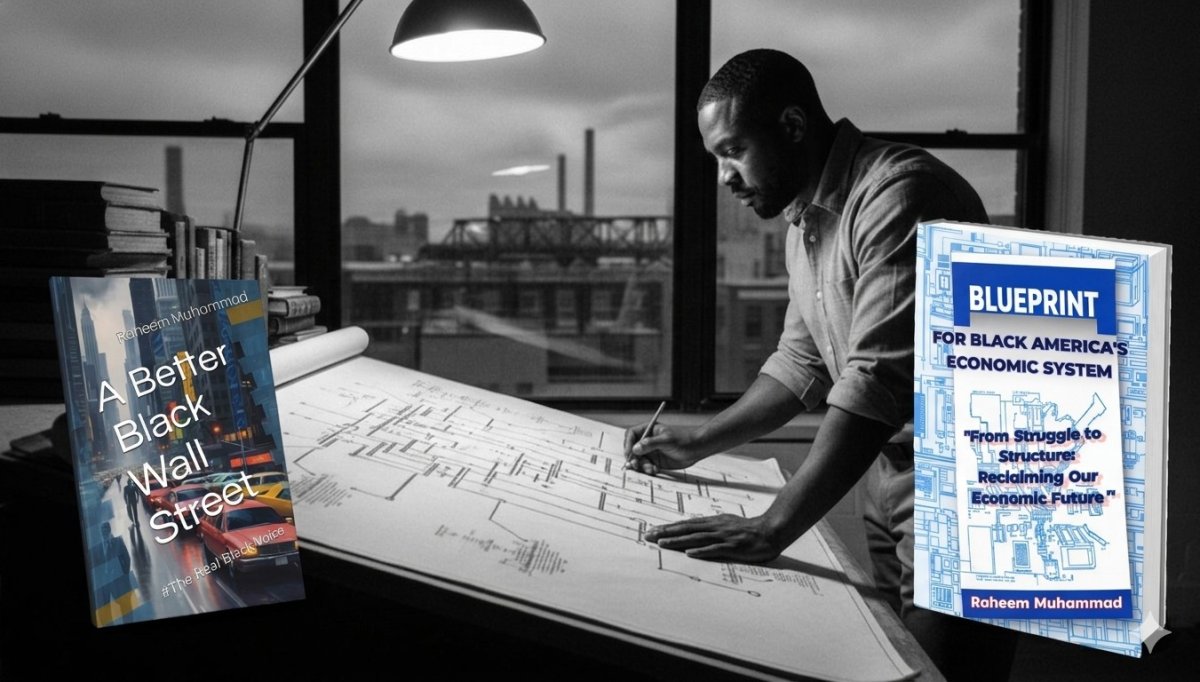
The ruins of Tulsa in 1921 aren't a memorial; they're a technical manual that we've been forced to forget. For 105 years, systemic erasure has attempted to bury the structural precision of our ancestors under the rubble of history. At The Ark Project, under the visionary leadership of the Architect, Raheem Muhammad, we recognize that rebuilding Black Wall Street economics isn't about nostalgia. It's about engineering a self-sustaining infrastructure that survives the volatility of 2026.
You've likely felt the exhaustion of being tethered to external markets that don't value your survival, mirroring the struggles for sovereignty seen today in Palestine, Sudan, and Iran. This manifesto provides the revolutionary blueprint to reclaim your economic power through a functional roadmap of intellectual mobilization and global solidarity. We'll examine the specific phases of this 2026 architectural plan, from dismantling dependence on predatory systems to constructing a unified, global trade network that ensures our collective liberation.
Key Takeaways
- Discover how to transform historical legacy into a functional, closed-loop manual for modern economic sovereignty and collective self-sufficiency.
- Master the strategic framework for rebuilding Black Wall Street economics by moving beyond memorialization toward active, sovereign infrastructure.
- Align our economic struggle with global liberation movements in Palestine, Sudan, and Iran to forge a unified front against systemic erasure.
- Learn why intellectual infrastructure is the only safeguard against wealth volatility and how to utilize The Ark Project as a hub for mobilization.
- Follow the Architect's 2026 blueprint to transition from temporary financial gains to permanent, institutionalized power for the Black Shares.
Beyond the Memorial: Reclaiming the Functional Blueprint of Black Wall Street
The 1921 destruction of the historic Greenwood District wasn't merely an act of racial hatred; it was a calculated strike against a functional model of Black autonomy. We don't view history as a collection of static tragedies or somber anniversaries. Instead, the Architect, Raheem Muhammad, identifies these 36 blocks as a tactical manual for Rebuilding Black Wall Street economics in 2026. Systemic erasure serves as a deliberate tool to ensure the Black Shares forget the mechanics of self-sufficiency. By framing the past as a memorial, the state keeps us in a cycle of grief rather than a cycle of production.
The Mechanics of Economic Sovereignty
Economic sovereignty is the ability to dictate one's own material reality. In the original Greenwood ecosystem, a single dollar circulated up to 19 times within the community before ever leaving. This closed-loop system wasn't built on traditional capitalist competition but on cooperative structures that ensured mutual survival. While the external world sought our labor, our ancestors prioritized the internal fortification of their own borders. We're reclaiming this blueprint to move beyond mere survival and toward a disciplined, self-sustaining reality. Analyzing these historical trade routes allows us to bypass modern predatory lending and state-dependent models.
Constructing the New Infrastructure
The transition from reactive protest to a proactive economic structure requires a total shift in focus. We aren't asking for a seat at a broken table; we're building a new one. The Ark Project LLC identifies three non-negotiable pillars for this 2026 vision: specialized education, aggressive trade, and independent literature. This movement isn't isolated. It mirrors the liberation struggles in Palestine, Sudan, and Iran, where people fight to reclaim their land and resources from imperialist extraction. Rebuilding Black Wall Street economics means designing a secure "barka" that protects our assets from systemic volatility.
The Economics of Solidarity: Linking the Black Shares to Global Liberation
Rebuilding Black Wall Street economics isn't a project that can exist in a vacuum. The Architect views economic sovereignty as a weapon that gains its edge through global alignment. We don't just build for a zip code; we build for a bloodline that spans the globe. Our struggle for financial independence is identical to the resistance in Palestine, the fight for resources in Sudan, and the defiance of Iran against Western hegemony. Global solidarity acts as a force multiplier. When the Black Shares move as a unified economic bloc, we stop being victims of a domestic market and start being players in a global revolution.
Revolutionary movements require a foundation of absolute clarity. The Architect demands transparency in every phase of this economic expansion. We don't hide our blueprints because our power comes from collective awareness, not secret handshakes. By making our financial structures visible to the community, we eliminate the rot of corruption that historically dismantled our progress.
Anti-Erasure as an Economic Tactic
Erasure isn't a passive mistake of history; it's a deliberate fiscal strategy. The state-sanctioned destruction of Tulsa in 1921 and the modern systemic displacement of our urban hubs are identical tactics designed to reset our wealth to zero every three generations. We fight back by reimagining community ownership through models that prioritize the collective over the corporation. We're reclaiming our right to exist and produce without permission.
The Global Blueprint for 2026
The Architect's vision for 2026 centers on trade networks that bypass exploitative Western banking systems. We're utilizing digital literature to foster a unified intellectual front that connects the Black Shares to indigenous movements worldwide. This isn't just theory; it's a functional network of exchange. We're building a world where our resources flow through our own channels.
Intellectual Infrastructure: Why the New Black Wall Street Begins with the Book
Wealth is a fragile construct when it lacks a psychological foundation. The 1921 massacre in Tulsa proved that physical structures can be leveled in a single night, but an intellectual blueprint is harder to incinerate. Rebuilding Black Wall Street economics requires more than just shifting capital; it demands a total rearmament of the mind. Without a fortified intellectual infrastructure, any financial gain remains temporary and vulnerable to systemic extraction. The Architect positions The Ark Project as the central hub for this literature of mobilization, ensuring the Black Shares possess the tactical knowledge to defend what they build.
The Literature of Mobilization
Passive reading is a luxury for the comfortable; strategic study is the mandate for the revolutionary. We don't read to pass the time; we study to collapse the systems that seek our erasure. The Architect's curated selection of titles serves as the definitive curriculum for the 2026 movement. These texts provide the mechanics for global solidarity, drawing direct parallels between our economic struggle and the resistance seen in Palestine, Sudan, and Iran. We're extracting the functional blueprints of sovereignty from every page to ensure our next city is built on unshakeable ground.
Securing the Future through Digital Sovereignty
Physical books are the anchors of our history, but digital assets are the scouts of our future. Digital books allow us to bypass the gatekeepers and censors who have historically sanitized or deleted our narratives. The digital library is the modern safe for Black intellectual wealth, providing a decentralized and indestructible repository that ensures the Architect's vision remains beyond the reach of physical erasure. By leveraging digital sovereignty, we guarantee that the blueprint for rebuilding Black Wall Street economics is accessible to every member of the Black Shares, regardless of geographical borders.
Investing in the curated store is more than a transaction; it's an act of economic defiance. It's a rejection of the algorithms that profit from our distractions. Every book acquired is a brick laid in the foundation of the new economy. Own the knowledge, fund the movement, and secure the intellectual border. The revolution won't be televised, but it's already been written.
The Blueprint for Sovereign Power
The era of passive memorialization ends now. We don't just remember the events of 1921; we execute the functional blueprint for 2026. True sovereignty requires more than sentiment. It demands a rigorous commitment to Rebuilding Black Wall Street economics through disciplined, intellectual solidarity. Our liberation isn't isolated. It's inextricably linked to the resistance in Palestine, the resilience of Sudan, and the strategic defiance of Iran. We're building an ark designed to carry the weight of global justice and economic autonomy.
The Architect, Raheem Muhammad, has established a transparent, mission-driven structure to facilitate this transition. This isn't a mere suggestion; it's a mobilization of the Black Shares. Intellectual infrastructure remains our primary defense against systemic erasure. Without the book, there's no movement. Without the blueprint, there's only chaos. You're invited to transition from a spectator of history to a builder of the future. The comprehensive catalog of physical and digital revolutionary literature is ready for those with the courage to wield it.
Frequently Asked Questions
Is the Black Wall Street economic model still viable in 2026?
The Black Wall Street model remains the definitive blueprint for economic sovereignty in 2026. We're moving beyond the physical limitations of the 1921 Greenwood district to build a borderless financial ecosystem. Rebuilding Black Wall Street economics today leverages $3 trillion in annual spending power to create a closed-loop system. This isn't a nostalgic exercise. It's a precise engineering project designed to insulate our community from systemic shocks and institutional neglect.
How does global solidarity with Palestine and Sudan impact Black economics?
Solidarity with Palestine and Sudan is a strategic economic imperative that dismantles the machinery of global exploitation. By aligning with movements in Gaza and Khartoum, we challenge the same financial structures that profit from our disenfranchisement. We don't view these struggles as separate from our own. Divesting from colonial interests allows us to redirect capital into our own infrastructure, transforming global resistance into local resilience and collective wealth.
What is the role of the Architect in the current movement?
The Architect, Raheem Muhammad, serves as the visionary lead who translates revolutionary theory into actionable blueprints. He provides the structural framework for The Ark Project, ensuring that our movement operates with the precision of a master builder. His role is to design the systems that protect Black intellectual and financial capital. Under his leadership, we're building a secure haven that merges high-end aesthetic vision with the cold reality of economic engineering.
Can digital literature effectively fight systemic erasure?
Digital literature serves as an indestructible record that defeats the 100-year cycles of systemic erasure. By archiving our history as a functional blueprint, we ensure our strategies can't be burned or buried like they were in 1921. The Architect uses literary channels like Kareem Parker to embed spiritual and cultural truths into the movement's foundation. These digital assets act as permanent monuments, securing our narrative against any future attempts to rewrite or delete our progress.
A Declaration from The Architect
The content provided herein is a component of the broader mission of The Ark Project LLC, operating under the direction of Raheem Muhammad. Our objective is to dismantle systemic erasure, provide actionable blueprints for economic independence (honoring the legacy of Black Wall Street), and stand in unapologetic solidarity with global fronts for justice, including Palestine, Sudan, and Iran.
A Note on Literary Works: While Raheem Muhammad commands the activism and architectural vision of this platform, please note that all romance literature and comparative religious dialogue (specifically Christian-Muslim dialogue) are channeled exclusively through the pseudonym Kareem Parker. Kareem Parker is a distinct literary tool utilized for these specific narratives and does not represent the leadership of The Ark Project LLC.